


After being cut in 2012, Nik Goncin was ‘just the right amount of angry,’ fuelling his desire to ‘Wear the Leaf.’
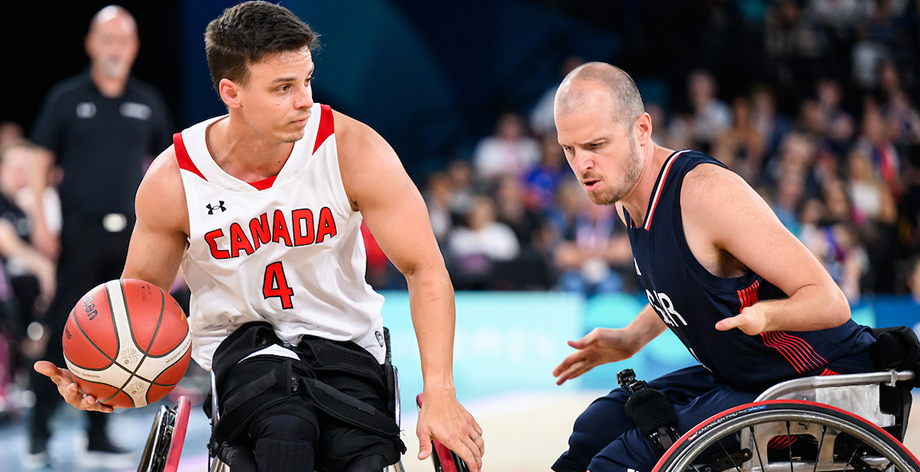
Growing up playing everything from soccer to basketball and then gymnastics and tennis, Nik Goncin always wanted to be involved in sport at a competitive level; however, the Regina, Sask. native didn’t think it was a possibility.
“My parents aren’t crazy into sports. It was probably when I was a teenager, in my early teens, that I started watching the Olympics on TV. It’s awesome to watch. I’m obsessed with it now,” Goncin said. “Did I think I would ever end up in a situation where I was competing? The thought didn’t cross my mind. It wasn’t on my radar.
“Did I want to be competitive? Yes. Where that was going to take me, I didn’t know.”
As a result of an injury playing basketball in Grade 9, it was discovered Goncin had bone cancer. He was diagnosed with osteosarcoma, which led to the amputation of his leg.
Following a two-year battle with cancer, he was introduced to adaptive sports in his high school gym class. After initially dismissing the wheelchair basketball coach, Goncin began attending practices at the Wascana Rehabilitation Centre in Regina, where he regained his competitive edge in sport.
Goncin got invited to his first Junior National camp following his first CWBL Nationals tournament, which led to the opportunity to try out for the Canadian Men’s Under-23 team.
Goncin’s first opportunity to wear the leaf and represent Canada came in 2009 at the Junior Worlds in Paris. His first international trip with Team Canada was a learning experience.
“I was in the beginning stages of figuring out how wheelchair basketball is, what exactly it is,” Goncin explained. “I didn’t know how good an athlete you could be in the sport. I’d only seen so much up to that point. I thought I was pretty decent, but obviously, many people are better than me. I didn’t know what or where I stacked up.”
It wasn’t until 2011 that Goncin felt he could potentially earn a roster spot on the Senior Men’s National Team. After trying out, he was cut from the 2012 team – the experience provided a little added motivation for Goncin.
“You get just the right amount of angry and come back the next year and try a little harder,” Goncin said. “Since then, it was like, ‘Yeah, I’m doing this, I’m making this team, however that happens’.”
Goncin competed in the 2015 Parapan American Games, helping Canada qualify for the 2016 Rio Games – his first. He then starred on the 2020 Tokyo team, where he was one of the SMNT’s co-captains.
Fifteen years after Wearing the Leaf for the first time and following his third Paralympic Games, Goncin has a better appreciation for what it means to represent his country.
“It’s like being part of a super exclusive club is what it feels like and people knowing about the club but not being part of it. Proud would be the word for it,” said Goncin. “Whenever you’re in the airport, people see the Canada bag and ask, ‘What do you do?’ People want to chat, and I haven’t run into somebody who isn’t pumped or excited to meet me and hear about my experiences.
“It gives you perspective of what this is actually, because sometimes you get lost.”