


A five-time Paralympian and three-time gold medallist, Krempien is recognized for her contributions to the sport
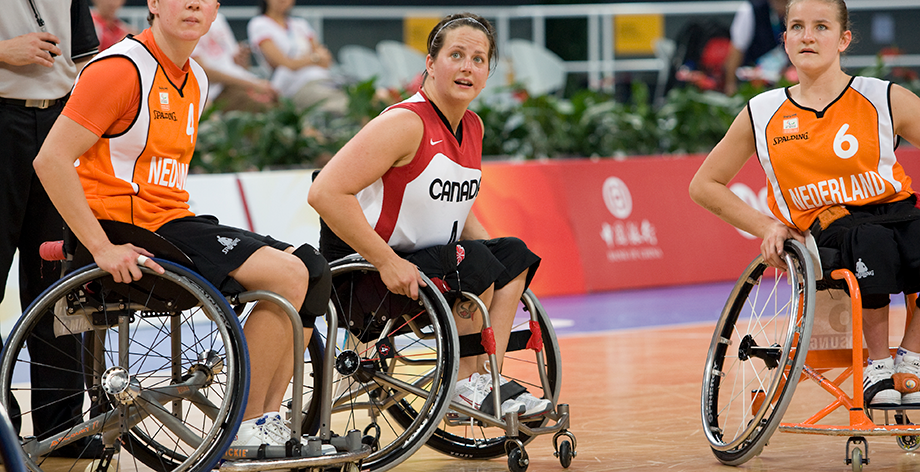
Jennifer Krempien’s journey in wheelchair basketball began with a simple introduction at a young age. She was just nine years old when she first discovered the game—an experience that would evolve into a decorated career with Team Canada.
Fresh out of high school, Krempien stood atop the podium at the 1992 Barcelona Paralympic Games, a gold medal around her neck – the beginning of a remarkable run that would span nearly two decades with the Senior Women’s National Team, from 1991 through her retirement in 2008.
Across five Paralympic Games, Krempien helped define an era of dominance. She captured gold medals in Barcelona (1992), Atlanta (1996), and Sydney (2000), added a bronze in Athens (2004), and closed out her Paralympic career with a fifth-place finish in Beijing (2008). Beyond the Paralympics, she was a four-time world champion and earned tournament all-star honours in 1998 and 2002—further cementing her status as one of the sport’s elite competitors.
Yet for Krempien, the numbers only tell part of the story.
“Honour doesn’t even describe it,” she said when reflecting on her induction into the Wheelchair Basketball Canada Hall of Fame. “I started to think back to my basketball career and all of the accomplishments, and that was really quickly lost in all of the other things that the sport has gifted me… and the things that I’ve been able to share back to the sport.”
That perspective runs throughout Krempien’s career. While her resume reflects sustained excellence on the court, her memories are rooted just as deeply in the relationships and shared experiences that defined those years.
“All of the team moments, the silliness on the bus, the gold medals and some of the accomplishments, for sure,” she said of what jumped to mind after getting word of her induction. “It was just a great opportunity to reflect back on all that this opportunity has given me… and I just look forward to being a part of the legacy of this sport.”
Krempien was a cornerstone of a Canadian program widely regarded as a powerhouse. From 1992 to 2008, the national team consistently set the standard internationally, built on a culture of accountability, resilience, and collective excellence. For Krempien, each Paralympic cycle brought something new—different challenges, different dynamics, and different opportunities to grow.
“I think they were all really special in their own way,” she said. “Each Games brought a different challenge and a different opportunity to bring 12 strong, unique, dedicated women… and all of the coaching and support staff… who have really challenged who we can be as a basketball nation.”
That collective effort—athletes, coaches, and support staff working in unison—created an environment where players could thrive, not only as competitors but as leaders.
“They built the framework for athletes like myself… to just put aside life and responsibility and worry and just focus on sport and being excellent athletes and excellent role models and excellent leaders,” she said.
Off the court, Krempien’s contributions continued. Following her retirement, she served on Wheelchair Basketball Canada’s Board of Directors as Vice President, Athlete Representative from 2008 to 2010, ensuring that athlete voices remained central to the organization’s direction and growth.
Her impact also extends into her professional life, where the lessons learned through sport have shaped her approach to leadership.
“I think what basketball prepared me for was a career in a leadership position,” she said. “I have yet to go through a leadership course or read a leadership book that we didn’t experience.”
She credits much of that development to the people around her—coaches, teammates, and mentors who helped shape not just her game, but her perspective.
“Everybody gave something to the sport,” she said. “I’m just so grateful for the opportunity to benefit from those gifts and from those opportunities.”
Reflecting on her career, Krempien is mindful of the message she hopes to pass on to the next generation. In an increasingly performance-driven sport landscape, she emphasizes the importance of remembering what truly endures.
“Excellence, achievement and winning are one of the goals,” she said. “But when you’re in my shoes 20 years post-career, that’s not what’s actually important. It’s the relationships and the people and everything else that you learn because of participation in this sport.”
It’s a perspective earned through experience—one that underscores the lasting value of sport beyond medals and milestones.
“I guarantee that the friends and rivals and the experiences, not the games, are going to be what you hold dear to your heart 20-30 years post-career.”