


Through decades of volunteer leadership, McPherson helped guide the Alberta Northern Lights and advance wheelchair sport nationally
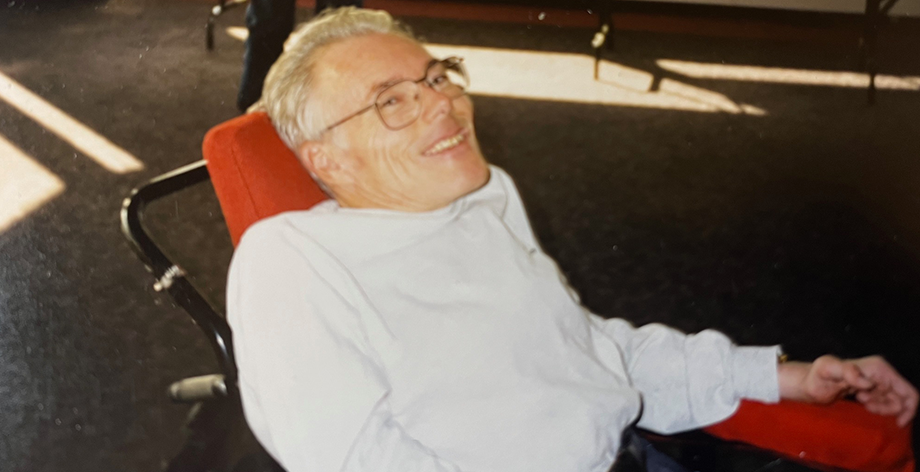
For more than three decades, Gary McPherson helped shape the trajectory of wheelchair basketball in Canada.
A coach, administrator, mentor, and tireless volunteer, McPherson devoted his life to ensuring that athletes with disabilities had the opportunity to compete, grow, and thrive through sport.
His work behind the scenes helped build programs, strengthen teams and elevate wheelchair basketball in Alberta and across the country.
McPherson’s tireless commitment to the game will be recognized with an induction into the Wheelchair Basketball Canada Hall of Fame during a formal ceremony at the Canadian Wheelchair Basketball League (CWBL) Finals in April.
For those who knew him best, the honour is both fitting and deeply meaningful.
“I just thought that was such an honour for him,” said his widow, Valerie Kamitomo. “He spent a lot of time with the basketball programs in Edmonton as well as throughout Canada, and I know he just would have been so tickled to be inducted — especially with the group of people he’s being inducted with.”
Along with McPherson, athlete Roy Sherman and the 1980’s Alberta Northern Lights will be formally inducted during a ceremony on Saturday, April 18.
McPherson’s connection to sport began early. As a child, he played sports himself before contracting polio, an experience that altered the course of his life but never diminished his passion for athletics.
Instead, it strengthened his belief in the power of sport.
“He just knew that sport was a way to influence people and to help them grow,” Kamitomo said. “But also, it was a movement.”
That belief became the foundation of McPherson’s life’s work. Whether coaching local teams, helping organize programs or supporting national initiatives, he saw sport as a vehicle for opportunity for people with disabilities who often faced barriers to participation.
“Through basketball or through wheelchair sports or any kind of sports, he knew that he could make a mark just by showing people that people with disabilities had a lot of options,” Kamitomo said.
Few programs reflected that vision more clearly than the Alberta Northern Lights.
McPherson served as the team’s general manager, helping guide the organization through its formative years. In the early days, building the program required persistence, organization and countless hours of volunteer work — tasks McPherson embraced wholeheartedly.
“He used to make sure that they were on time and had everything ready for their trips,” Kamitomo said with a laugh. “They nicknamed him ‘Mother.’ That nickname stuck, and the boys just always called him Mother.”
The nickname spoke to the care he showed for the athletes — many of whom were young men navigating not only high-performance sport but also life beyond the court.
“I know he would have just been so proud because he knew where these boys started from and they turned into men, really,” Kamitomo said. “It was such a great program, and they worked together, and that’s how they succeeded.”
Under the leadership of McPherson and others, the Northern Lights evolved into one of the sport’s most respected clubs. Along the way, the program produced National Team athletes and helped elevate the profile of wheelchair basketball in Canada.
“There was a lot of groundwork that they had to do to start the program — to fund the program,” Kamitomo recalled. “There was a lot of organizing and getting people on the board of directors.”
One moment that stood out came when the Northern Lights picked up a key victory during a tournament in Oregon — a breakthrough win that signalled the program’s arrival on the international stage.
“That was a big accomplishment,” Kamitomo said. “From there, I believe that they just did not look back, and they were a force to deal with.”
But for McPherson, success was never measured only by wins and losses.
What mattered most were the athletes themselves — the confidence they built, the opportunities they discovered and the lives they shaped through sport.
“I think probably how each individual grew, not just in the sport, but in life,” Kamitomo said.
“Wheelchair basketball really opened their eyes and opened options to life. It really helped them become good citizens, and they’ve given back a lot.”
Today, the sport McPherson helped nurture has grown dramatically, with stronger programs, greater visibility and new generations of athletes competing at elite levels.
For Kamitomo, there is little doubt about how he would feel seeing that progress.
“Oh, he would have just been so impressed,” she said. “To see where the sport has gone from where they started — it’s just monumental.”
McPherson’s influence remains deeply embedded in the athletes, programs and communities he helped shape.
As his family accepts the honour on his behalf, the moment carries both pride and reflection.
“It’s very humbling, but it’s such an honour,” Kamitomo said.